NRK Engineering

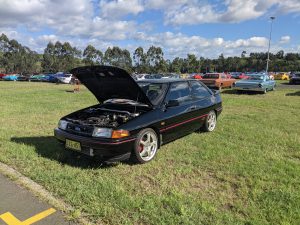
Fuel Pump Replacement in Ford Laser TX3

Ford Laser TX3 Fuel Pump Replacement

When working on old cars, you are often dealing with antiquated technology and significant wear. This technology may have fulfilled its purpose when new, but now after 20 to 30 years  the current technology has undergone tremendous advances and far out performs the origonal equipment. Factor in the degradation of time and you have parts that are no longer suitable for their origonal purpose.  

A recent project on the TX3 involved replacing the fuel pump. This task may sound simple on the surface, but due to age and previous modification it required careful consideration and creative engineering to get the job done.

The Problem

I knew something wasn’t right not too long after I had installed the new ECU. While the car had not been tuned yet, the fueling was all over the place and hard to get a consistent value. Luckily I had installed a fuel pressure sensor as part of the ECU install. This confirmed my suspicions as the pump was struggling to get to the base fuel pressure of 42 psi at idle, and would drop to 20 psi while driving. Good thing I had not tried to do any full throttle tuning.

This car is now over three decades old. The original fuel pump was replaced in the early 2000s with one from a Nissan Silvia. This was ok at the time as the modifications were modest. However given another 25 years and some time sitting with stale fuel in the tank, this upgraded pump is struggling to keep up with demand. Considering the car now has a modern ECU and I am planning on adding larger injectors, I feel the car is in need of a bit more fuel flow. I don’t plan on going crazy (gearboxes for this car are not known for their strength and are a bit hard to find now), so I only need a pump that will support the modest power increase and do so for the next 25 years.

The Solution

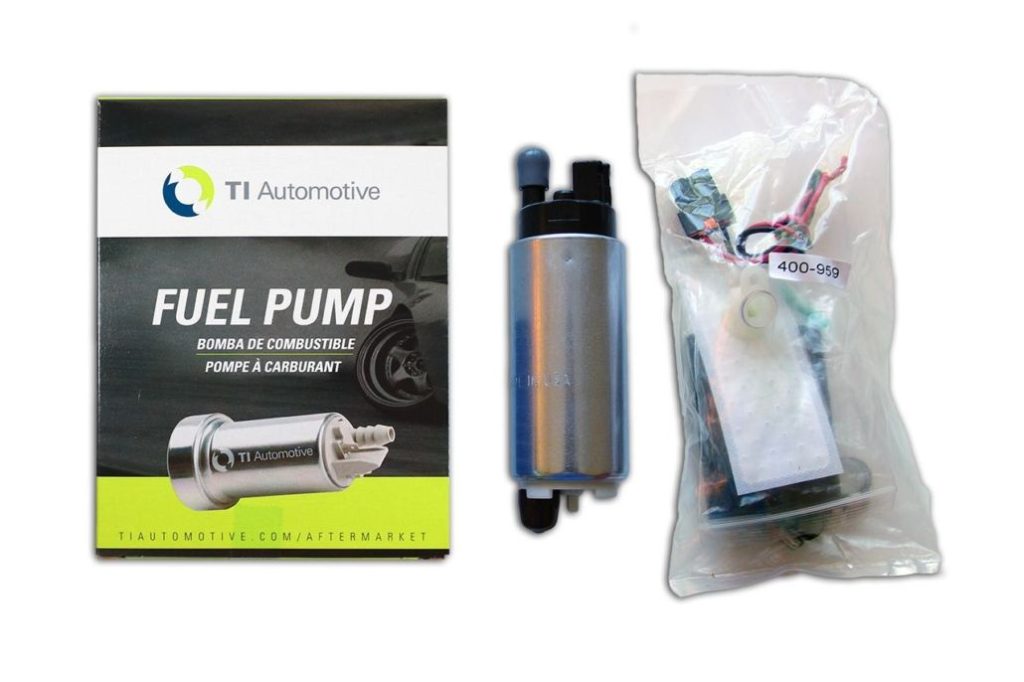
With this in mind I chose to install a Walbro 255 LPH pump that I bought from T. I. Performance. I chose this pump as it was easy to obtain, designed for an in tank install and able to supply fuel for well more power than I planned to have. It also gives me the option that if I do ever need more fuel flow (running E85 for example) I should be able to change this pump to a larger Walbro more easily.

As always the plan was simple: remove the old pump from the hanger, fit the new one in its place, wire it up, and reassemble. However, as with everything for a car like the TX3, not everything went to plan.

The New Problem

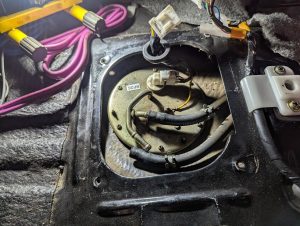
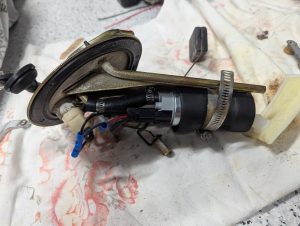
I removed the fuel pump hanger and the old fuel pump. I then mounted the Walbro pump in its place and found that the hanger inlet was slightly offset to the outlet of the pump. No big deal I guess, I was able to adjust the bracket so it kind of fit. I tightened everything up and fitted it back to the car. I turned on the ignition and was immediately greeted with the sound of the fuel pump running. It sounded different than I expected, but I just put it down to a performance fuel pump. I powered up the computer and checked the fuel pressure. 3 psi. What?

Irreversible Modifications

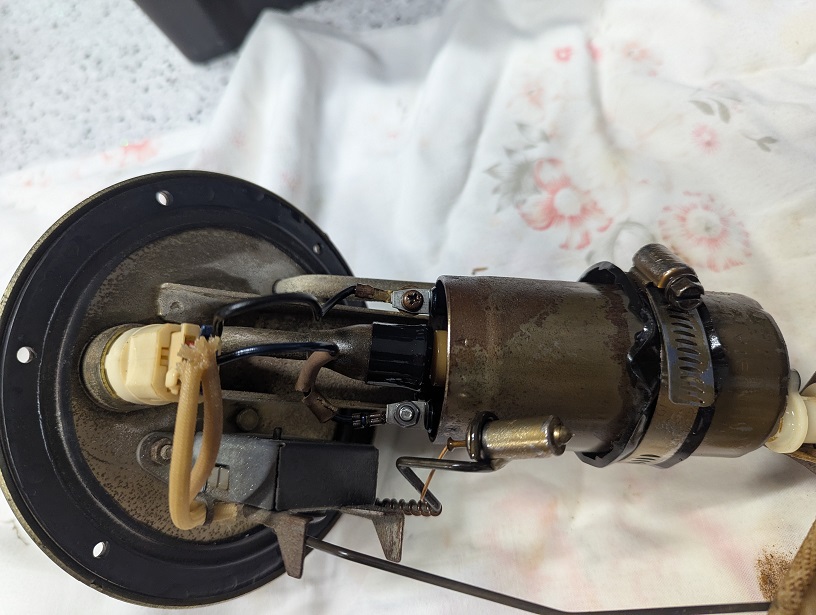
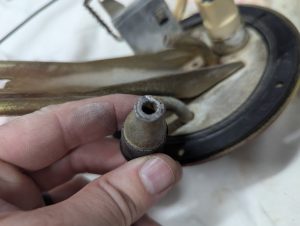
So out came the hanger again and I more closely inspected the pump outlet. It seems that the grommet inside the hanger inlet had perished and was not making a good seal on the pump outlet. No problem, I will just get a new one. Scouring the internet for hours came up with nothing. The closest I got was a grommet from an RX7 but it was prohibitivly expensive and not guaranteed to fix my problem. Why didn’t Ford (or Mazda I guess) use a hose to join these two like most manufacturers?

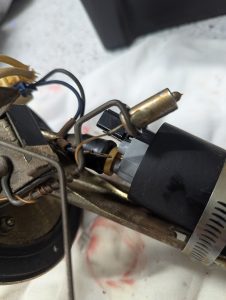
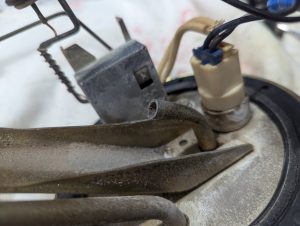
So after much deliberation with myself I decided the only thing I could do was to cut off the end of the hanger inlet to remove the rubber grommet mount and use a piece of hose to connect the two. This troubled me as I don’t like unnecessarily destroying parts I can no longer get. Also there was not a lot of the hanger inlet, so I had to get this right the first time. It was also closed to other components therefore careful cutting would be required.

With bated breath I broke out the hack saw and carefully started to cut into my fuel pump hanger, knowing there was no going back. It went without any complication and I now had room to install the fuel hose. This also solved the problem of the offset inlet as the hose was able to take up the difference.

Success!!

Happy with my modification I have reinstalled the hanger into the car and primed the system again waiting to see if we got the base pressure of 42 psi. It was 49 psi, hmm, close enough. I guess it is better to have too much than not enough.

Final Thoughts

Working on ,and especially modifying, older cars is never easy or straightforward. Anyone who tells you differently is lying or has someone else working on the car for them. However it is these challenges that make it fun and enjoyable.

The TX3 now happily runs with none of the problems I encountered before, and went onto the dyno for tuning with no fueling issues. Until it ran out of injector. But that is a blog for another time.

Laser TX3- 90s Turbo Weapon

Ford Laser TX3 Turbo - Early 90s Turbo Weapon

The late eighties/early nineties was a glorious time for automotive advancement. The styling had moved on from the early 80’s boxy style to a more rounded look. Also more prevalent was the introduction of turbo charging to mainstream audiences. Spurred on by international rally competitions, manufacturers like Mitsubishi, Subaru and Toyota designed and built powerful four wheel drive warriors. 


The Mazda 323 GTX was born when Mazda declined to support the Word Rally Championship Group B RX7 to instead focus on Group A. It developed a car using the Mazda Familia chassis giving it full time four wheel drive and a 1.6 litre turbocharged engine, which produced 186kW (250 hp). Unfortunately this engine was outgunned by the more powerful 2 litre competitors, managing to only win three out of 54 races between 1986 and 1990.


In 1990 Mazda developed a new car with the Familia GTX. This used the new BF platform and had a larger 1.8 litre 209 kW (280 hp) turbocharged engine, still using full time four wheel drive. Mazda even went on to develop the Familia GTR with an even more powerful engine and various other goodies to tackle rallying before finally losing interest in rally racing after the 1993 season. These cars continued to race privately with mixed success.


What has all this got to do with Ford I hear you ask. Well during this period, ford was sharing various platforms for their cars with other manufactures in a process called rebadging. The Mazda 626 and Ford Telstar, is one example and another is the Nissan Pintara and Ford Corsair. Ford also used the Mazda 323 chassis for their Ford Laser line. This started in the early 80s and continued until 2003. 


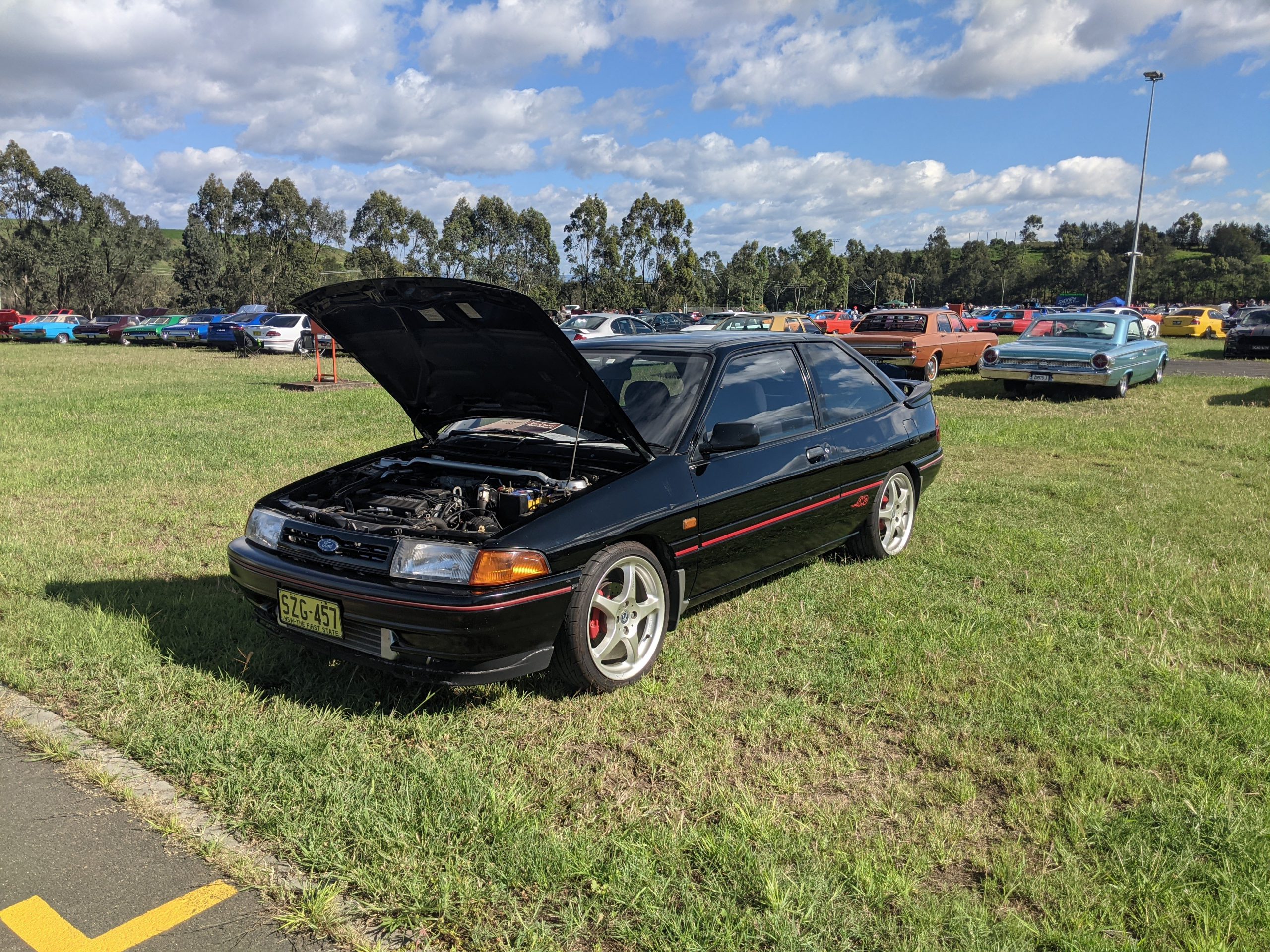
Ford took the opportunity to use the Mazda Familia GTX cassis and drive line to create a hero car of their own. In 1986 the Ford Laser TX3 was born. The TX3 was initially only available with a 1.6 litre fuel injected engine producing 61 kW (82 hp). The next year the laser was given a facelift and with it came the option of a turbo motor producing 101 kW (135 hp) and four wheel drive. The engines were the same engines as used in the Familia GTX, but were detuned due to Australia’s inferior fuel. All ford lasers in Australia were built in their Homebush plant in Sydney, except for the four wheel drive turbo versions which were built in Japan and imported.


The fact that Ford added the four wheel drive model is significant as they did not have an equivalent vehicle anywhere in the world at the time. There was a performance model of the Escort in the RS Turbo, but it was still front wheel drive and the mighty Sierra would not get a four wheel drive version until 1990. 


When Ford introduced the third generation of Laser in 1989 they did not forget to include an updated TX3. The base model had the updated 1.8 litre BP1800 engine producing 92 kW (123 hp) or the four wheel drive turbo model which produced 117 kW (157 hp), again less than the Mazda counterpart at 132 kW ( 178 hp).As with the previous generation the turbo model was built in Japan and imported to Australia.


Today the TX3 Turbo is a rare car to see on the roads. It never achieved the popularity of similar models at the time such as the Subaru Impreza WRX and Mitsubishi Lancer GSR. However it was still not uncommon to see one out and about on a Saturday night.


While new cars today are more powerful, reliable and better handling, the TX3 still remains one of the original turbo hot hatches that put a smile on your face every time you drive it with its raw driving experience. You could easily call the  Focus RS this spiritual successor to the TX3. It is the first turbo four wheel drive hot hatch since the TX3 available in Australia. The focus is an unbelievable car to drive and produces the same smiles per miles that the TX3 can. However, the drive is still tainted by electronic intrusion which has made all the modern cars so reliable and safe.